Why the names do not translate
Brazil and the United States break a carcass down differently, so a Brazilian cut is rarely the same piece of meat as the American one it gets translated into. That is why a menu that says 'top sirloin' can mean something quite different from what you are picturing.
The names below are the ones you will hear called out at the table. Knowing four or five of them is enough to eat well anywhere in a churrascaria.
Picanha
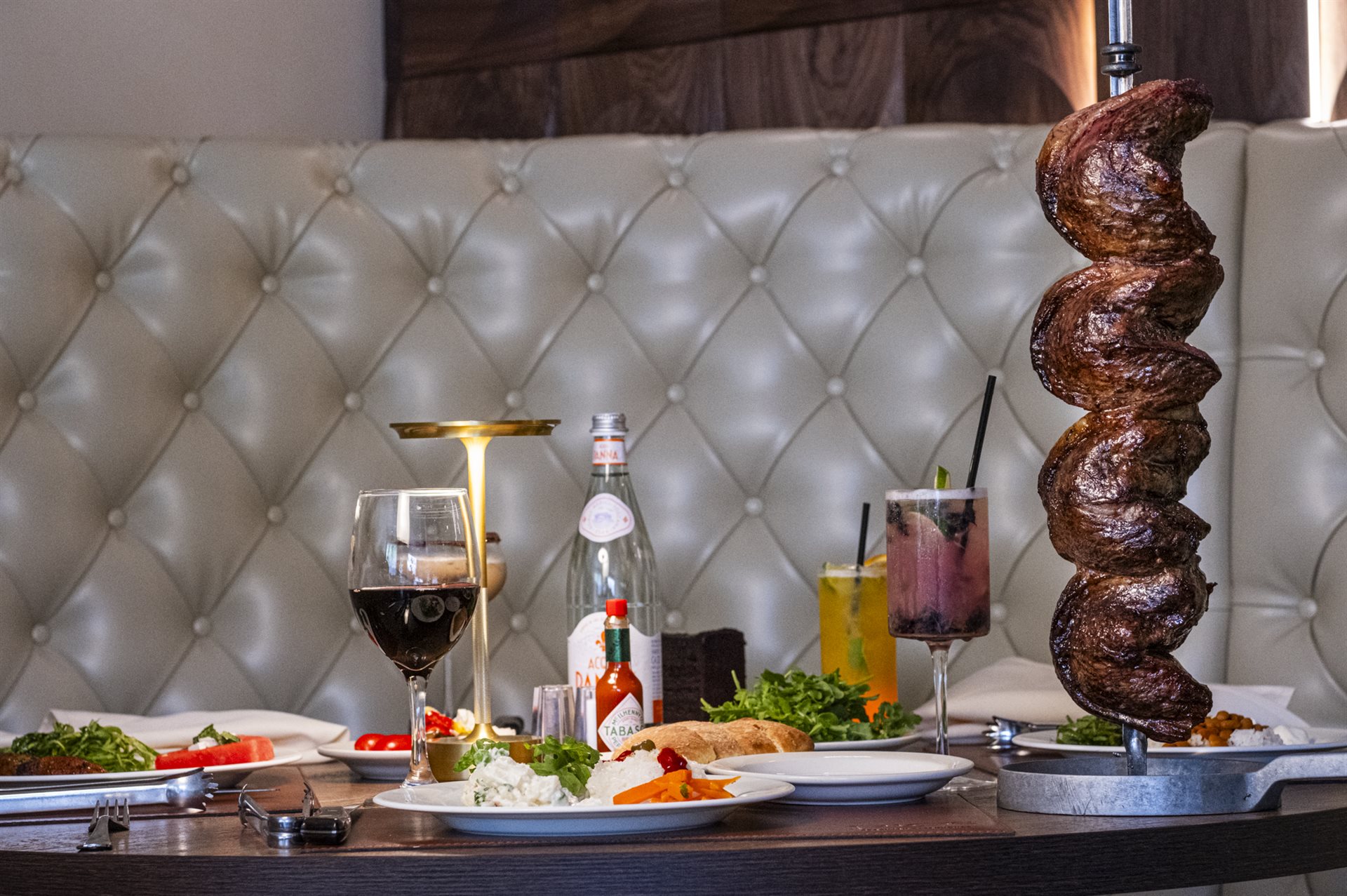
The signature cut, and the reason most people are here. It is the cap of the top sirloin, with a thick layer of fat left on one side. It gets bent into a horseshoe on the skewer so the fat sits on the outside, bastes the meat as it renders, and crusts with coarse salt.
Ask for a slice with the fat edge attached. That edge is the point of the cut. Trimming it off gets you a fine piece of sirloin and misses the entire idea.
Fraldinha
Flank, roughly. A long, grainy, deeply beefy cut that takes time over lower heat and rewards it. The edges char while the middle stays tender, and it carries salt better than almost anything else on the fire.
If you like the crusty outside of a roast more than the centre, ask for an end slice.
Costela
Beef rib, and the cut that most obviously cannot be rushed. It spends hours over the flame until the meat gives up and comes away from the bone. It is the least fashionable cut on any churrascaria menu and frequently the best thing on it.
Linguiça, frango and lombo
Linguiça is Brazilian pork sausage: coarse, garlicky, and the thing that usually arrives first while the beef is still working.
Frango is chicken, most often thigh, and at its best when it has been sitting in garlic and lime. Chicken hearts also appear in many churrascarias and are worth trying once with an open mind.
Lombo is pork loin, usually wrapped in bacon so a lean cut does not dry out over open heat. It is the mildest thing on the rotation and a reliable choice for anyone who is not a beef person.
What goes alongside
Farofa, toasted cassava flour, is not a garnish. Sprinkle it over the meat and it soaks up the juices and adds texture. Rice and beans are the base the whole meal sits on, and grilled pineapple with cinnamon between cuts resets your palate better than anything else on the bar.